
What Bookkeeping CostsTwo quotes, one real month
Two quotes are on your desk and they do not agree. We cannot judge either one until the month has a name: the accounts, the transactions, how far behind, and who reviews the close. We put both quotes against eight questions, we price that month, and then you choose. We are Steven Palmieri's practice, a Tax CFO, the Entrepreneur's CFO.
Bring the quotes you are holding

You will be talking to the Steven Palmieri practice.
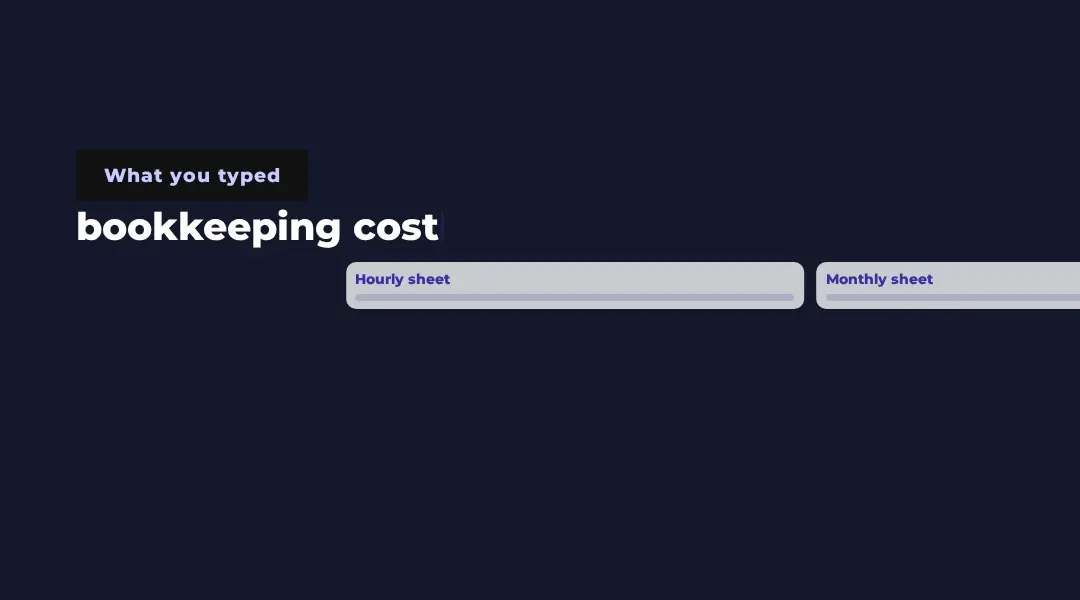

Hourly, or a month with a name
An hourly quote grows with the backlog. A monthly quote has to name the month.
Click to read ›Tap to read ›
A wage beside the fee
The wage on a handbook line is someone else's paycheck. The fee you worry you are overpaying still waits until your month has a name.
Click to read ›Tap to read ›
What a month ought to include
The bank and the books agreed, payroll reports in their own month, a close someone reviewed.
Click to see ›Tap to see ›
When the books fell behind
We price a catch-up only after the open months are counted.
Click to see ›Tap to see ›
The word and the job
'bookkeeping' on a quote can mean data entry, a review, or a return. The eighth question tells you which.
Click to read ›Tap to read ›
What this number will and will not buy
Name every row the quote buys before Monday.
Click to read ›Tap to read ›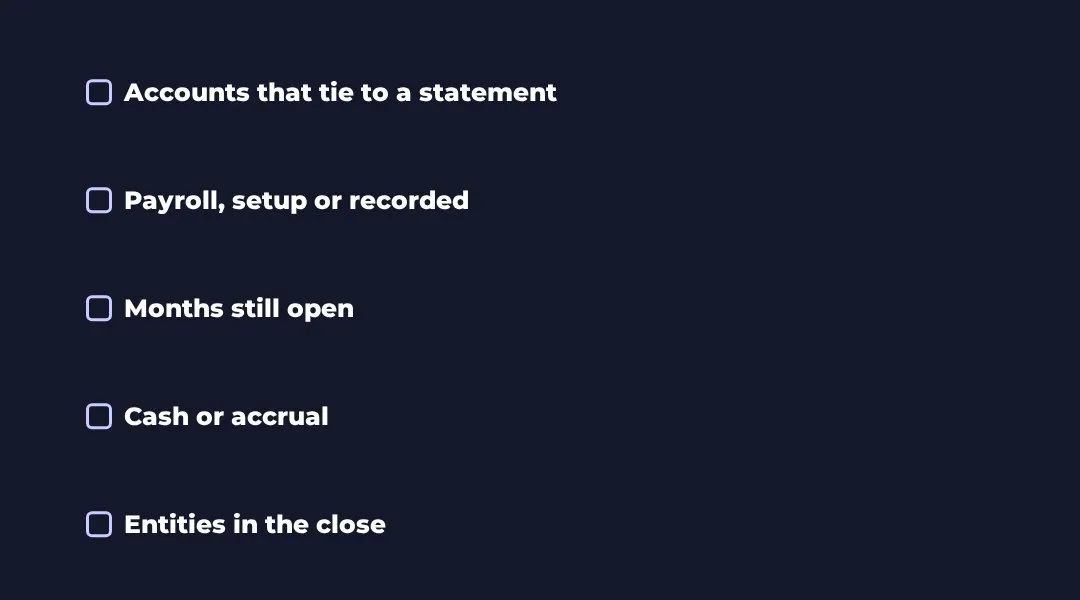
Which quote is in your hand?
Open the card that matches your quote.
1Two monthly numbers and no list
We read the list with you
A monthly figure is only comparable once both quotes name the accounts, the review, and whether the return is prepared from that close.
2An hourly quote that climbed
We scope the open months first
Hours follow the backlog. The calmer number shows up after the open months are counted, not before.
3A software close with no return
We ask that question out loud
Reconciled accounts can be real work and still leave the return to rebuild the year in March.
4A lender wants a signed statement
We say so on the first call
That signature is outside this practice. The months can still be closed here while a firm that can sign handles the cover.
5Payroll is already running somewhere else
We record it, we do not run it
Setup and the wage accounts belong with the close. The provider you already pay people from keeps running the payroll.
6Catch-up with statements you cannot find
We separate missing paper from unopened paper
A statement nobody has opened is ordinary work. A statement the bank cannot reissue is a different problem, and the scope says which one it is.

We keep the month with Steven Palmieri, a Tax CFO. The name we answer to is the Entrepreneur's CFO.
Click to meet the practice ›Tap to meet the practice ›Put the eight answers on the call
Two answers are enough to start. The number is said on the call.
You will be talking to the Steven Palmieri practice.
Read why two quotes diverge
The afternoon the two numbers land
Most owners reach this page with one figure, or two, and no list under either. One quote looks careful. The other looks like a bargain. Neither number means much until you know which work it buys. We wrote the eight questions so you can use them on anybody, including a quote that never comes near us.
A rate stays off these pages on purpose. Transactions, accounts, payroll setup, months behind, cash or accrual, the count of entities, who reviews the month, and whether the return is prepared from the close move the number so far that a printed rate would be a guess about a business we have not seen. You would be right to wait for the file. The first card plays the two quotes until they become one month you can point at. We still price a month only after we have seen the file, and a printed total with no list under it does not change that wait.
The hour the two quotes are still on the table
Two quotes sit side by side on the desk. One names hours. One names a month. They do not agree, and neither one can be judged until the month has a name. Count the open months before the two numbers are treated as a choice.
The hourly invoice is the one that kept growing. A quiet week and a slammed week land on the same sheet, and the total follows the backlog. The handbook wage is someone else's paycheck, and it can sit beside your quote without becoming your fee. The fee still waits until the month has a name, which is the part that lets you stop guessing.
The month nobody reviewed is the one that looks closed and is not. We want the bank and the books agreed, and a person who did not enter the lines to read that agreement, before the receipts pile up at quarter end. Name the accounts the monthly fee actually covers.
The quote that said bookkeeping and meant data entry is the one the eighth question catches. Posting rows is real work. A review, a return, and a catch-up of open months are different work. We price a catch-up only after the open months are counted. The scope names the months.
Write the monthly close the same evening the statements arrive, before a second day of sales covers the first. The relief is a drawer that matches the card batch, and a fee that is the same size as that job.
The worry we hear most is paying the lower quote and finding in March that the deposit never matched the day. Name the rows before you accept the number, so the next morning is a list.
The eight questions, in the order we actually ask them
Start with the transactions in an ordinary month, then the accounts that have to tie back to a statement. Say whether payroll is being set up here or only recorded after a provider has already run it. Be plain about how many months are still open. Say whether the books are cash or accrual, how many entities sit inside one close, and who reviews a month before anyone calls it finished.
The last question is the one people skip. Is the tax return prepared from this close, or from somewhere else entirely? Seven of the questions are ordinary scope. The eighth changes the product. A file that never has to survive a return is a different piece of work from a file the same practice will read back to you while the year can still change.
A personal transfer that lands in the business checking is a common way the eighth question gets expensive. If nobody stops it, the deposit is booked as if the business earned it. The return then inherits income that was only a movement of your own money. We look for that before the year is locked, because unwinding it in March is how a cheap close becomes a second bill.
What a good month feels like
The statement arrives. Every line on it already has a home in the books, or it is on a short list of things only you can explain. The difference between the statement and the books is zero. Someone who did not enter every line reads that zero before the month is called closed. Payroll reports from the provider you run are recorded, not retyped as a single mysterious journal.
After two months of this work, you should be able to hold a closed month that matches the bank and a written list of what the return will need. That closed month is the object we are after. The day it arrives follows the day the statements show up, so the calendar stays specific to your file.
Why the cheaper quote sometimes costs more
A lower number can be a fair price for a smaller list. It becomes expensive when the return has to rebuild accounts that were never reconciled, payroll that was entered with no reports behind it, or a cash file the return cannot use as it stands. No dollar total for that rebuild is printed here, and no competitor is named. The mechanism is the point. Work left off the monthly list is still work, and it arrives when the return is the deadline.
If your lower quote already answers the eighth question with a yes, and the list matches, the lower number may simply be a smaller month. The questions are how you tell those cases apart. Bring the lower quote. We look for the missing rows. We do not mock the price.
A wage you can cite, and a fee you cannot
The BLS Occupational Outlook Handbook page for bookkeeping, accounting, and auditing clerks shows a median annual wage of 50,670 dollars, and 24.36 dollars an hour on the same quick facts line. The lowest ten percent earned less than 36,000 dollars and the highest ten percent earned more than 74,550 dollars. Those figures are wages for employees. A fee a firm charges a small business is a different object, and so is any rate from this practice. Seller pages also print monthly ranges. Those ranges move, and a citation that no longer matches its source is worse than a gap, so they are not copied here.
A related handbook line for accountants and auditors is a wage as well. The fees page is where the clerk wage lives, with its source. The invoice for a month we have not seen stays unwritten until the call.
The first conversation
Have the quotes, or the answers you already know. If two of the eight are all you can say, that is enough. The rest we can work out from the bank. Reserved work is pointed at the disclosures page, and the call will not take that work. The clip on the first card plays with the sound off. Nothing else on these pages moves on its own.
Take the eight questions with you either way. You should not have to sit in a lobby to compare two prices.